Robotic Platforms
Testing across different kinematics (wheeled, tracked, legged) ensures our perception and navigation algorithms are robust and adaptable to any off-road environment.
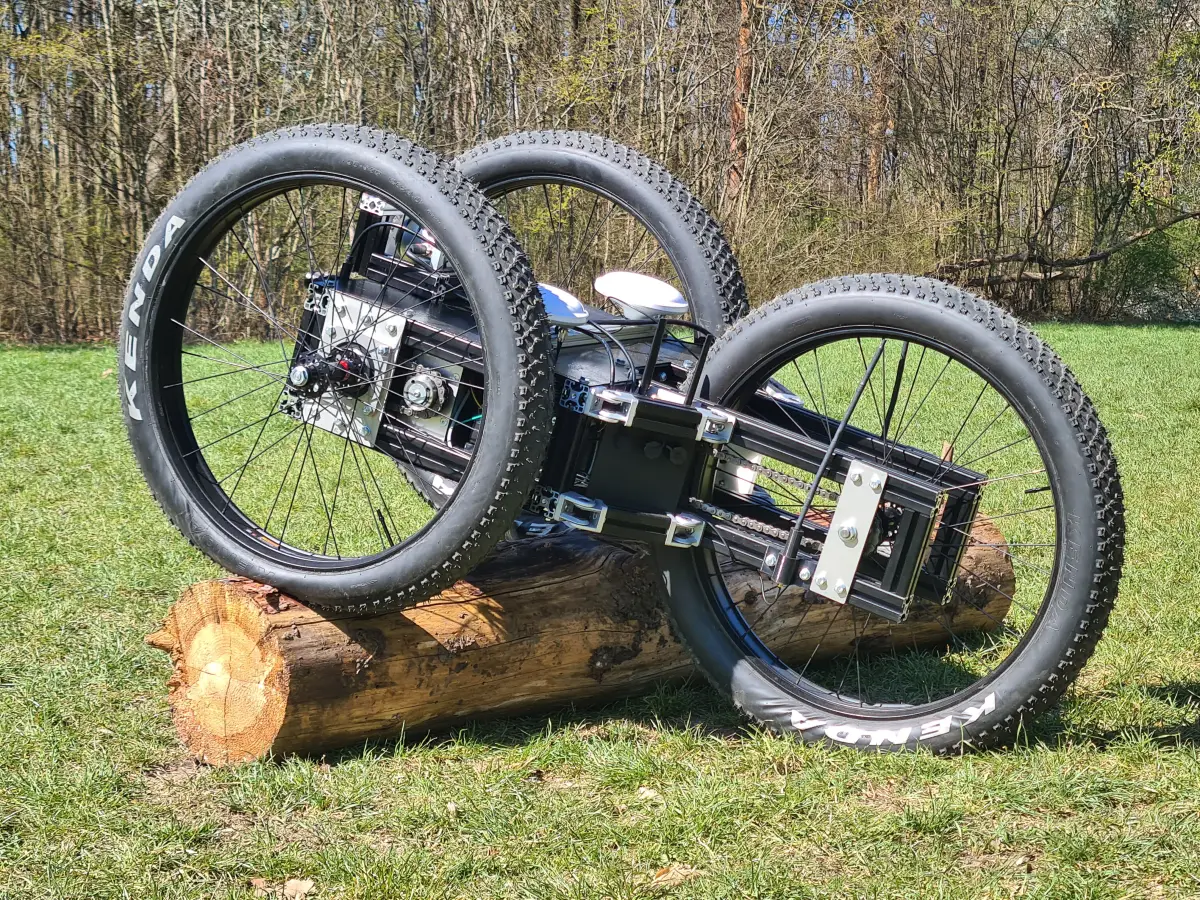
Helhest
- Design
- T-shaped, three-wheeled mobile platform.
- Performance
- Reaches speeds up to 20 km/h, carries up to 100 kg, and overcomes obstacles up to 0.5 m high.
- Sensor Configuration
- Equipped with a front-mounted, upside-down Livox LiDAR sensor to optimize close-range terrain perception.
- Research Role
- The primary platform generating the custom helhest and rough datasets, used in conjunction with RELLIS-3D for terrain property estimation.
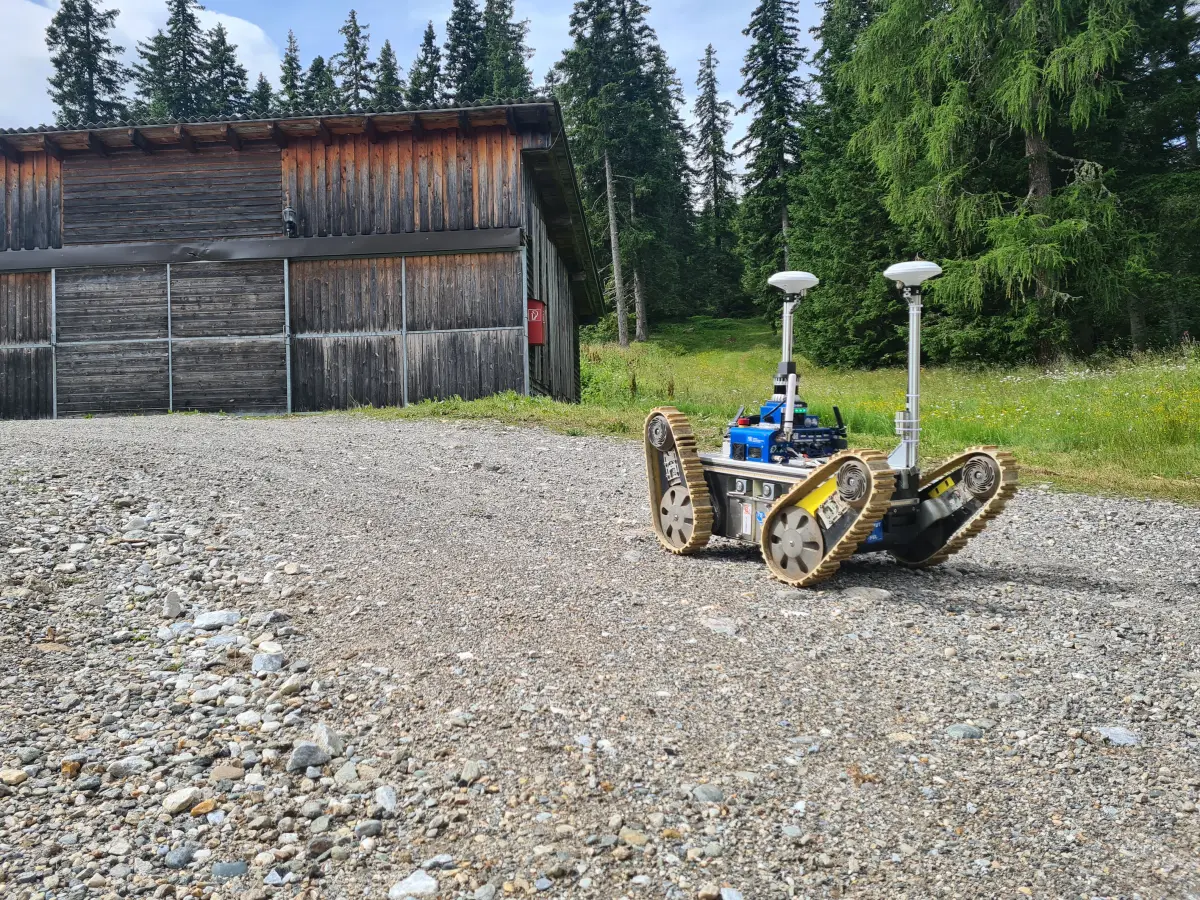
MARV (JettyVision)
- Design
- Rugged all-terrain vehicle with a Kevlar composite body.
- Mobility
- Features articulated tracks for superior maneuverability and rotate-on-the-spot precision.
- Research Role
- Provides a continuous-track baseline for testing friction estimation and control algorithms on soft or challenging outdoor surfaces.
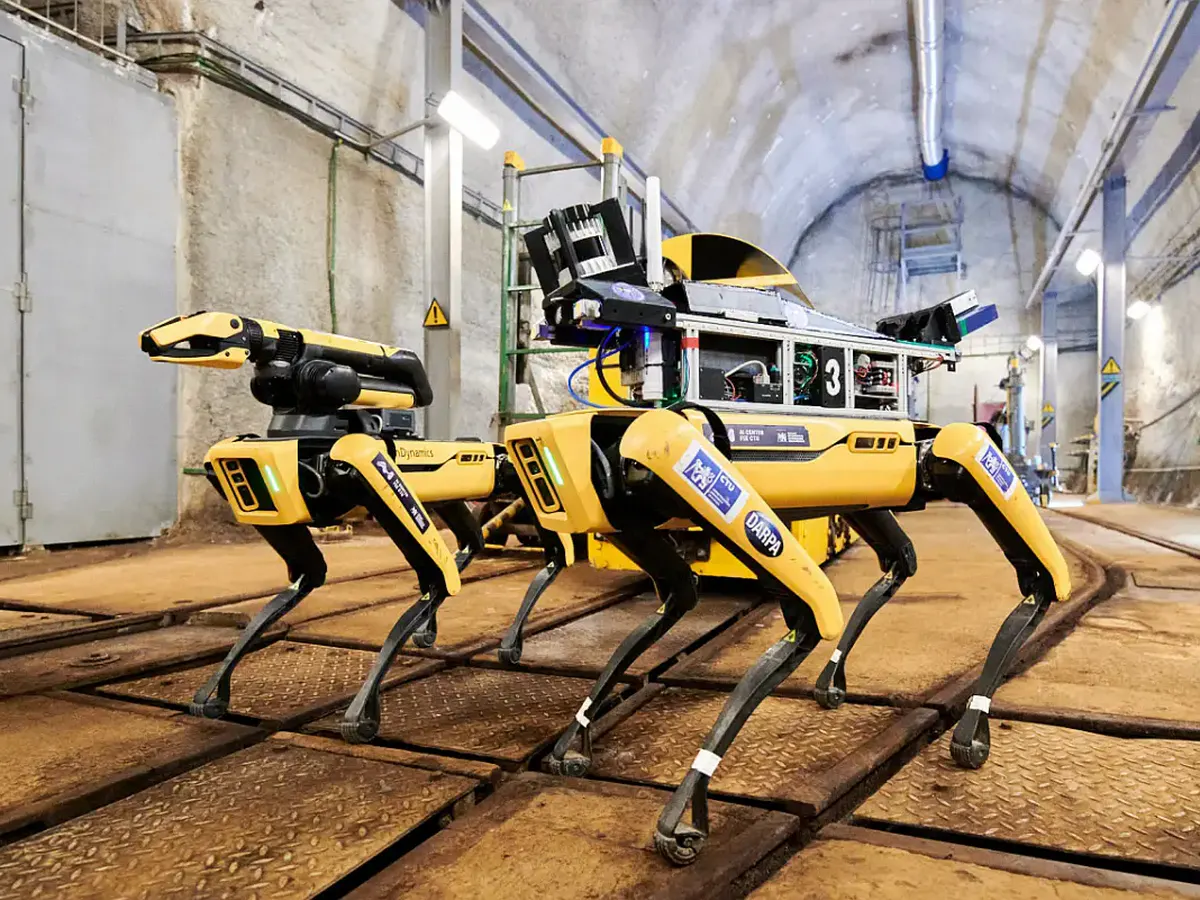
Spot (Boston Dynamics)
- Design
- Agile quadruped robot.
- Mobility
- Excels at dynamic balancing and navigating unstructured environments, including steep inclines and stairs.
- Research Role
- Ideal for validating the generalization of our perception pipeline across fundamentally different locomotion methods.
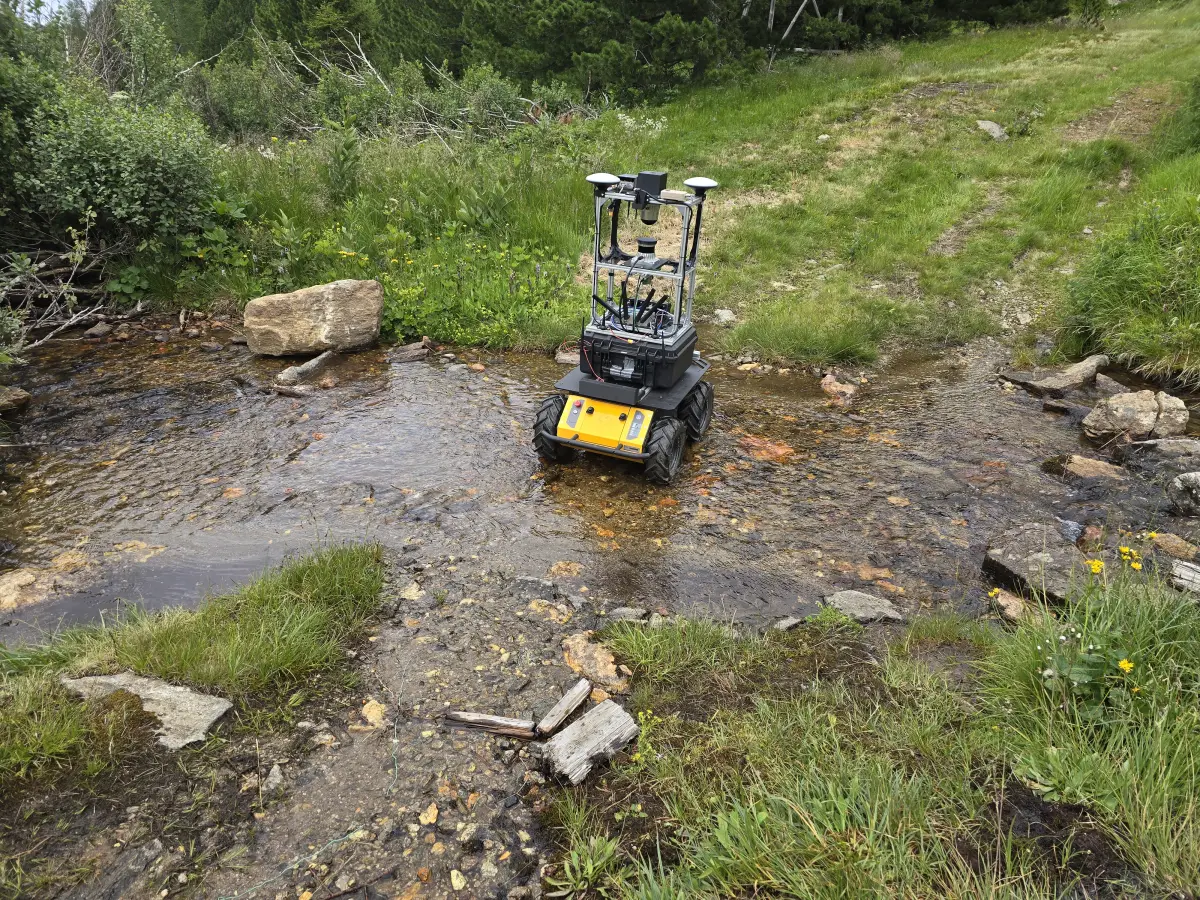
Husky (Clearpath Robotics)
- Design
- Robust, four-wheeled Unmanned Ground Vehicle (UGV).
- Integration
- Industry-standard research platform known for reliability and a vast open-source ecosystem.
- Research Role
- Serves as a heavy-duty wheeled baseline for comparative testing of off-road path planning and obstacle avoidance.